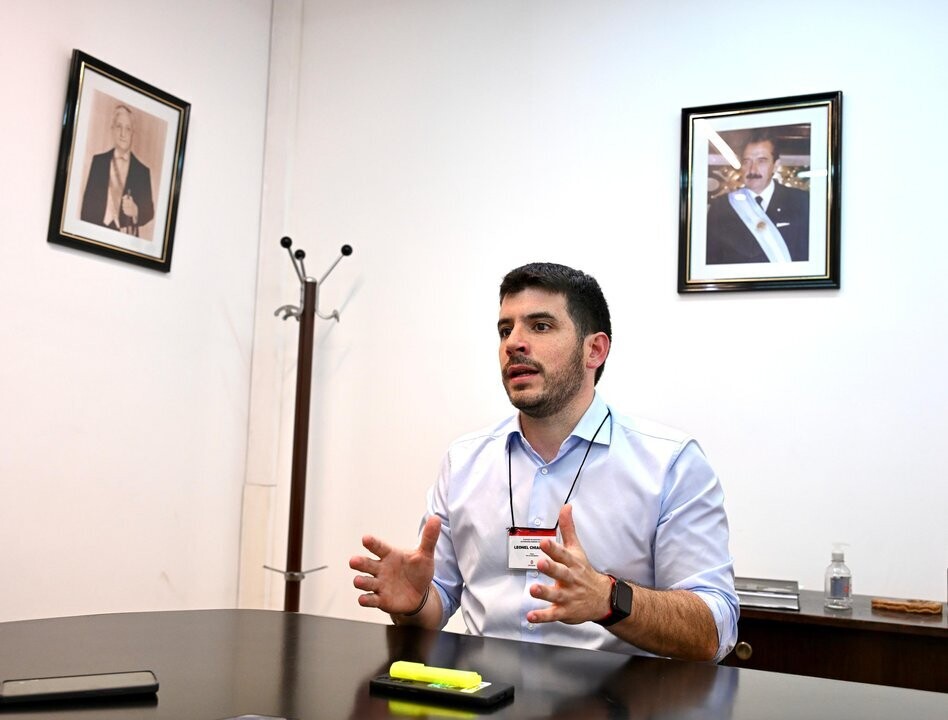
Buenos Aires, December 20 (NA) -- The new president of the Radical Civic Union (UCR), Leonel Chiarella, stated that the party must leave behind internal disputes and build an agenda of "common sense and issues that matter to people".
In an interview with the Argentine News Agency (NA), the mayor of Venado Tuerto also noted that the space must "make a self-criticism and build internal consensuses around figures with a vocation for government and territorial support" if it wants to have competitive presidential figures again.
Regarding the profile that radicalism will have in the new stage after the departure of Martín Lousteau, he expressed: "There are government initiatives and issues that are raised, with which we agree".
Chiarella, a leader close to the governor of Santa Fe, Maximiliano Pullaro, and to Lousteau, was elected to preside over the UCR with the endorsement of all sectors, including those most aligned with President Javier Milei, such as Mendoza's Alfredo Cornejo and Chaco's Leandro Zdero, who formed alliances this year with La Libertad Avanza (LLA).
Below are the main excerpts from the interview:
What is the relationship with the UCR sectors closest to the national government?
It is very good. I am dialoguing with everyone: with Leandro (Zdero), with Alfredo (Cornejo), and with leaders from different provinces. Today there are more workers in the informal sector than in the formal one, which discourages hiring. A labor modernization is needed that protects workers, SMEs, and retirees.
What do you expect from the budget debate?
We believe that Argentina needs to have a budget, and this budget must respect the specific allocations of resources. There are debates that have nothing to do with ideological issues, but rather with common sense issues. This is how any responsible organization works. The UCR is not just the blocs: there are the territories, the mayors, the governors, and the national party.
Why is it difficult for radicalism to install a competitive candidate at the national level?
There is no single reason. In recent years, external leaderships have emerged that occupied that space.